
PVC Screen & Casing: The Key to North Florida Wells
Posted by Walford Guillaume on Mar 4th 2026
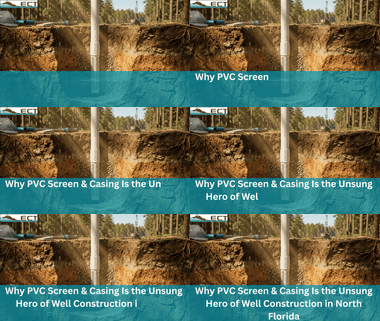
Why PVC Screen & Casing Is the Unsung Hero of Well Construction in North Florida
Clean water doesn't just happen. Behind every reliable residential well, there's a quiet workhorse doing the heavy lifting underground — and most people never give it a second thought.
Have you ever turned on your faucet, filled a glass of water, and wondered what it actually took to get that water there? When most people think about well construction, their minds jump to the dramatic stuff — the thundering drilling rigs, the powerful pumps, or the sheer engineering feat of reaching the water table. But lurking quietly beneath the surface is a crucial component that rarely gets the credit it deserves: the PVC screen and casing.
Especially here in North Florida, where groundwater is not just a convenience but a way of life, the materials used in well construction can mean the difference between decades of clean, reliable water and a costly, contaminated nightmare. So today, let's pull back the curtain and shine a well-deserved spotlight on why 3/4" SCH40 PVC screen and casing is the unsung hero of well construction in our region — and why every homeowner, contractor, and farmer in the Tallahassee area should care deeply about what's going into the ground.
What Is PVC Screen & Casing, Anyway?
Before we can appreciate why this material matters so much, it's worth taking a moment to understand what it actually does.
In the simplest terms, the casing is the sturdy pipe that lines the interior of a well borehole. Think of it as the skeleton of the well — it prevents the surrounding earth from collapsing inward, keeps surface contaminants out, and provides the structural integrity that the entire system depends on. Without proper casing, a well is essentially a hole in the ground waiting to fail.
The screen, on the other hand, is a specialized section of the casing featuring precisely engineered slots or perforations. Its job is remarkably clever in its simplicity: allow water to flow freely into the well while simultaneously blocking sand, sediment, and debris from entering. It acts as a gatekeeper, ensuring that the water you draw is as clean as the aquifer it comes from.
Together, the screen and casing form the backbone of any well system. Furthermore, when you choose the right materials — specifically 3/4" Schedule 40 PVC — you're setting your well up for long-term success from the very moment installation begins.
Why North Florida's Geology Demands Quality Materials
Here's something many people don't fully appreciate: not all regions are created equal when it comes to well construction challenges. North Florida presents a uniquely demanding environment that puts real pressure on well materials.
Our region sits atop the Floridan Aquifer System — one of the most productive aquifers in the entire world, but also one that comes with its own set of challenges. The sandy, porous soils that define our landscape are great for drainage but notoriously unforgiving when it comes to well stability. Shifting sand particles can infiltrate poorly constructed wells, leading to sediment-laden water, clogged pumps, and accelerated wear on your entire system.
Moreover, North Florida's water table fluctuates with the seasons. During heavy summer rains, water levels rise. During dry spells, they drop. This constant movement creates mechanical stress on well materials over time. In addition, the chemical composition of groundwater in our region — including naturally occurring minerals and, in some areas, higher chloride concentrations — can corrode metal components far faster than you might expect.
Consequently, the choice of well casing material isn't just a technical detail to leave to your contractor. It's a decision that directly affects your water quality, your well's lifespan, and your long-term costs. This is precisely why SCH40 PVC has become the material of choice for so many experienced well builders and homeowners throughout the region.
The Advantages of 3/4" SCH40 PVC Screen & Casing
So what exactly makes this particular material stand out? As it turns out, the benefits are both numerous and compelling.
Exceptional Durability Where It Counts
First and foremost, SCH40 PVC is engineered to resist the very forces that destroy other materials underground. Unlike steel or iron casing, PVC doesn't rust. It doesn't corrode when exposed to the mineral-rich groundwater common throughout North Florida. Furthermore, it resists the chemical reactions that can cause metal casings to deteriorate, pit, and eventually fail. For a component that may spend decades underground, this kind of resilience isn't just a nice feature — it's essential.
Lightweight Design That Saves Time and Money
Ask any well contractor about the practical challenges of installation, and the weight of materials will come up quickly. Compared to metal alternatives, PVC is dramatically lighter, which translates directly into faster, simpler installation. As a result, labor costs go down, installation time shrinks, and the risk of on-site injury decreases. For DIY enthusiasts tackling smaller residential well projects, this weight advantage can be the difference between a manageable project and an overwhelming one.
Cost-Effectiveness Without Cutting Corners
One of the most common misconceptions about PVC is that its affordability somehow implies inferior quality. In reality, the opposite is often true. SCH40 PVC delivers a remarkable balance of structural strength, chemical resistance, and longevity at a price point that metals simply can't match. Moreover, because PVC requires virtually no maintenance and is highly resistant to the underground conditions found throughout North Florida, the total long-term cost of ownership is even more favorable than the upfront price suggests.
Environmental and Health Safety
Perhaps one of the most important — yet frequently overlooked — advantages of quality PVC casing is what it doesn't do. PVC is chemically inert, meaning it doesn't leach harmful substances into the water flowing through it. For well owners who depend on their groundwater for drinking, cooking, and irrigating food crops, this is a critical consideration. On the other hand, certain metal casings and inferior plastic alternatives can introduce unwanted compounds into the water supply over time. With SCH40 PVC, that risk is effectively eliminated.
The Perfect Fit for North Florida Applications
The 3/4" diameter specification is no accident. This size is ideally matched to the residential and small commercial well applications most common throughout the Tallahassee area and surrounding communities. It provides reliable, consistent water flow rates without unnecessary bulk or over-engineering. Consequently, it represents the sweet spot between performance and practicality for the vast majority of local well projects.
Real-World Impact: Protecting Our Water and Our Community
Here's a thought worth sitting with: every well in North Florida that uses quality screen and casing isn't just protecting one family's water supply. It's protecting the broader groundwater system that we all share.
Poorly constructed wells — particularly those with failing or inadequate casing — can serve as direct pathways for surface contaminants to enter the aquifer. Pesticides, fertilizers, bacteria, and other pollutants can bypass the natural filtration of the soil and reach the water table, potentially affecting neighbors' wells and the broader regional water supply. In a state where approximately 90% of the population relies on groundwater for their drinking water needs, this is a responsibility that extends well beyond individual property lines.
Moreover, investing in quality materials like SCH40 PVC is an act of community stewardship. When North Florida contractors and homeowners choose durable, reliable well components, they're contributing to the long-term health of the Floridan Aquifer — a shared resource that supports not just our homes and farms, but also the springs, rivers, and wetlands that make this region so remarkable.
Common Questions About PVC Screen & Casing
How long can I expect SCH40 PVC casing to last? When properly installed, high-quality PVC well casing can last 30 to 50 years or more. In many cases, the casing outlasts other well components by a significant margin.
Is PVC safe for drinking water wells? Absolutely. NSF-certified PVC products are specifically manufactured to meet drinking water safety standards. Furthermore, PVC's chemical inertness means it won't react with or contaminate the water it contains.
Can I use SCH40 PVC for both the screen and the casing? Yes — in fact, this is the most common and recommended approach for residential wells throughout North Florida. Using matching materials throughout the well simplifies installation and ensures compatibility.
Ready to Build a Better Well?
The next time you turn on your tap and water flows clean and clear, remember: somewhere underground, a length of unassuming PVC screen and casing is working hard to make that moment possible.
If you're planning a new well project, upgrading an existing installation, or simply doing your homework before making a decision, the quality of your screen and casing deserves serious attention. Fortunately, you don't have to look far to find the right materials. ECT Manufacturing offers an extensive selection of 3/4" SCH40 PVC screen and casing specifically suited to North Florida's unique conditions, backed by the expertise and experience that local well builders trust.
Visit ECT Manufacturing's 3/4" SCH40 PVC Screen & Casing today and take the first step toward a stronger, safer, longer-lasting well.
The Bottom Line
Clean water is not a given. It is, in every sense, an engineering achievement — one that depends on making the right choices at every step of the construction process. By choosing quality SCH40 PVC screen and casing for your well project, you're not simply checking a box on a materials list. You're making a commitment to your family's health, your property's long-term value, and the shared water resources that sustain North Florida's communities, farms, and natural landscapes.
In a world full of shortcuts and compromises, choosing the right well materials is one place where getting it right from the start pays dividends for decades to come. Here's to clean water, smart choices, and the unsung heroes working quietly underground to make both possible.
Found this article helpful? Share it with a neighbor, a fellow homeowner, or anyone in North Florida who's thinking about well construction. The more informed our community is, the better we can protect the groundwater we all depend on.